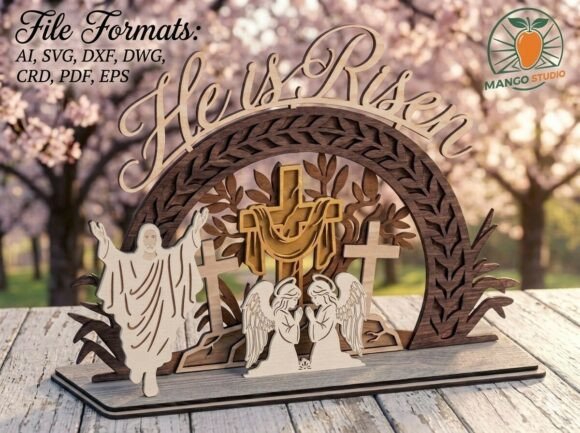
Evaluating the He Is Risen 3D Layered Scene-LaserCut_3m for Easter Decor
Creating meaningful holiday decor often involves balancing aesthetic appeal with technical feasibility. For those interested in laser cutting and CNC crafting, the He is Risen 3D Layered Scene-LaserCut_3m represents a specific approach to religious seasonal decoration. This digital design file is engineered to produce a multi-tiered shadow box effect, capturing the resurrection narrative through distinct layers of Christ, angels, crosses, and an archway. Unlike flat silhouettes or single-cut designs, this resource focuses on depth and dimensionality, requiring careful planning regarding material thickness and assembly.
When considering this specific file format and design style, it is essential to understand its structural requirements and how it fits into broader crafting workflows. The design is optimized specifically for materials with a 3mm (approximately 1/8 inch) thickness. This specification is not arbitrary; it dictates the spacing between layers, the visibility of shadows, and the overall stability of the final piece. Evaluating whether this file aligns with your available inventory and machine capabilities is the first step in determining its value for your project.
Design Architecture and Layered Depth
The primary distinction of the He is Risen 3D Layered Scene-LaserCut_3m lies in its architectural composition. Traditional laser cut patterns often rely on a single plane, where detail is achieved through intricate internal cuts rather than physical separation. In contrast, this design utilizes a stacked approach. The scene includes multiple components: a base, a decorative arch, the three crosses, praying angels, and the central figure of the risen Christ. Each element is designed to be cut separately and then assembled with spacers to create a tiered visual effect.
This multi-layer methodology offers a significant advantage in terms of visual impact. By separating the background elements from the foreground figures, the design creates natural shadows that add reverence and solemnity to the piece. However, this approach also introduces complexity. A single-layer design might take minutes to assemble, whereas a five or six-layer scene requires precise alignment and potentially more time-consuming construction. Crafters must weigh the desire for a high-end, museum-quality finish against the additional labor required for assembly.
Furthermore, the optimization for 3mm material is critical. If a user attempts to use this design with significantly thicker stock, such as 6mm acrylic, the spacing between layers will increase disproportionately, potentially breaking the visual continuity of the scene. Conversely, using thinner material like 1.5mm plywood may result in a lack of substantial shadow play, diminishing the intended 3D effect. Therefore, the design is most effective when paired strictly with the recommended material thickness, ensuring the proportions remain true to the artist's vision.
Material Compatibility and Machine Considerations
One of the practical strengths of the He is Risen 3D Layered Scene-LaserCut_3m is its compatibility with standard crafting materials. The file is engineered for 3mm plywood, MDF, acrylic, or solid wood. This versatility allows crafters to choose a finish that matches their existing decor or personal preference. Plywood offers a warm, rustic texture that complements traditional church settings, while acrylic provides a modern, translucent look that can enhance light transmission if backlit.
However, material choice impacts the cutting process. MDF is dense and produces fine details but requires good ventilation due to fumes. Acrylic melts rather than burns, requiring different power and speed settings to achieve clean edges without charring. Users should ensure their laser cutter—whether a Glowforge, xTool, or professional CO2 unit—is calibrated for the specific material selected. The vector formats included (SVG, DXF, PDF, DWG, AI) are fully scalable, meaning the scene can be resized to fit various shadow box dimensions without losing resolution. This scalability is a distinct advantage over raster-based images, which degrade when enlarged.
It is worth noting that while the file is compatible with major software like LightBurn, the user must still perform test cuts. Different batches of wood have varying grain densities, and acrylic sheets can vary in quality. A design that works perfectly on one machine may require parameter adjustments on another. The "plug-and-play" nature of the file refers to the geometry, not necessarily the machine settings, which remain the responsibility of the operator.
Comparing Layered Scenes to Alternative Styles
When exploring options for Easter decor, buyers often encounter several distinct categories: single-layer silhouettes, stained-glass style templates, and multi-layered shadow boxes. The He is Risen 3D Layered Scene-LaserCut_3m falls squarely into the latter category. Comparing these styles reveals clear tradeoffs in terms of cost, time, and visual outcome.
- Single-Layer Silhouettes: These are the quickest to produce. They are ideal for large-scale banners or simple wall hangings where depth is not a priority. They are less expensive in terms of material waste and time but lack the dimensional richness of layered scenes.
- Stained-Glass Style: These designs focus on color and light transmission rather than depth. They often involve cutting pieces to fit together like a puzzle. While beautiful, they do not offer the same dramatic shadow effects as the layered approach.
- Multi-Layered Shadow Boxes: Designs like the He is Risen 3D Layered Scene-LaserCut_3m offer the highest perceived value. They transform a flat image into a sculptural object. The tradeoff is the requirement for a frame or box to house the layers and the increased number of parts to manage during production.
For a home altar or a church display where the piece serves as a focal point, the layered approach is generally superior. It commands attention and conveys a sense of permanence and importance. However, for temporary decorations or budget-conscious projects, a simpler silhouette might be more appropriate. The decision ultimately depends on the intended lifespan of the decor and the resources available to the crafter.
Best Use Cases and Decision Factors
Determining if the He is Risen 3D Layered Scene-LaserCut_3m is the right choice involves assessing the project's context. This design is particularly well-suited for creating spiritual centerpieces, mantel displays, or gifts for individuals who appreciate detailed craftsmanship. The inclusion of the message "He Is Risen" within the arch makes it a powerful statement piece, suitable for both private devotion and public worship spaces.
Consider the following factors before proceeding:
- Space Availability: Because the design relies on depth, it requires a shadow box or frame with sufficient interior height. A flat frame will not accommodate the layered structure effectively.
- Assembly Skill Level: While the cutting is automated, the assembly requires patience. Aligning multiple layers so that the figures sit correctly relative to the crosses and arch demands precision. Beginners might find the process challenging without practice.
- Material Inventory: As noted, the design is optimized for 3mm stock. If you have only 1/4 inch (6mm) or 1/16 inch (1.5mm) material, you may need to purchase new supplies or adjust the design, which could alter the intended aesthetic.
In scenarios where the goal is to create a unique, heirloom-quality item, this file offers excellent value. The ability to scale the design means it can be adapted for small desktop altars or large church installations. However, if the objective is rapid production of mass-market items, the complexity of the layered assembly might slow down the workflow compared to simpler alternatives.
Technical Specifications and File Formats
The utility of the He is Risen 3D Layered Scene-LaserCut_3m is enhanced by the variety of file formats provided. The ZIP archive typically includes SVG, DXF, PDF, DWG, and AI files. This comprehensive package ensures compatibility across different operating systems and design software. SVG and DXF are the industry standards for vector cutting, widely supported by machines like Glowforge and xTool. The inclusion of AI and DWG formats caters to users who wish to make minor customizations using Adobe Illustrator or CAD software.
Scalability is a key feature here. Whether you intend to create a small 8x10 inch piece or a monumental 24x36 inch installation, the vector paths maintain their integrity. There is no pixelation or loss of detail, which is crucial for the fine lines found in the angels' wings and the facial features of Christ. This flexibility allows the design to serve diverse needs, from individual hobbyists to commercial sign shops.
Despite these advantages, users should verify that their specific machine software supports the chosen format. Some older controllers may struggle with complex nested vectors common in multi-layer designs. Testing a small section of the file before committing to a full run is a prudent step to avoid material waste.
Conclusion on Suitability
The He is Risen 3D Layered Scene-LaserCut_3m stands out as a robust option for those seeking to elevate their Easter decor beyond the conventional. Its strength lies in the sophisticated use of depth and shadow to convey a spiritual narrative. While it requires more time and specific material considerations than simpler designs, the resulting product offers a level of artistry and emotional resonance that flat alternatives cannot match.
For crafters with access to 3mm materials and the patience for detailed assembly, this design is a compelling choice. It balances technical precision with artistic expression, making it suitable for both personal enjoyment and professional commissions. However, for those constrained by time, limited tooling, or a need for rapid turnaround, simpler single-layer options may present a more practical solution. Ultimately, the decision rests on aligning the design's requirements with your specific goals, resources, and the desired impact of the final piece.